
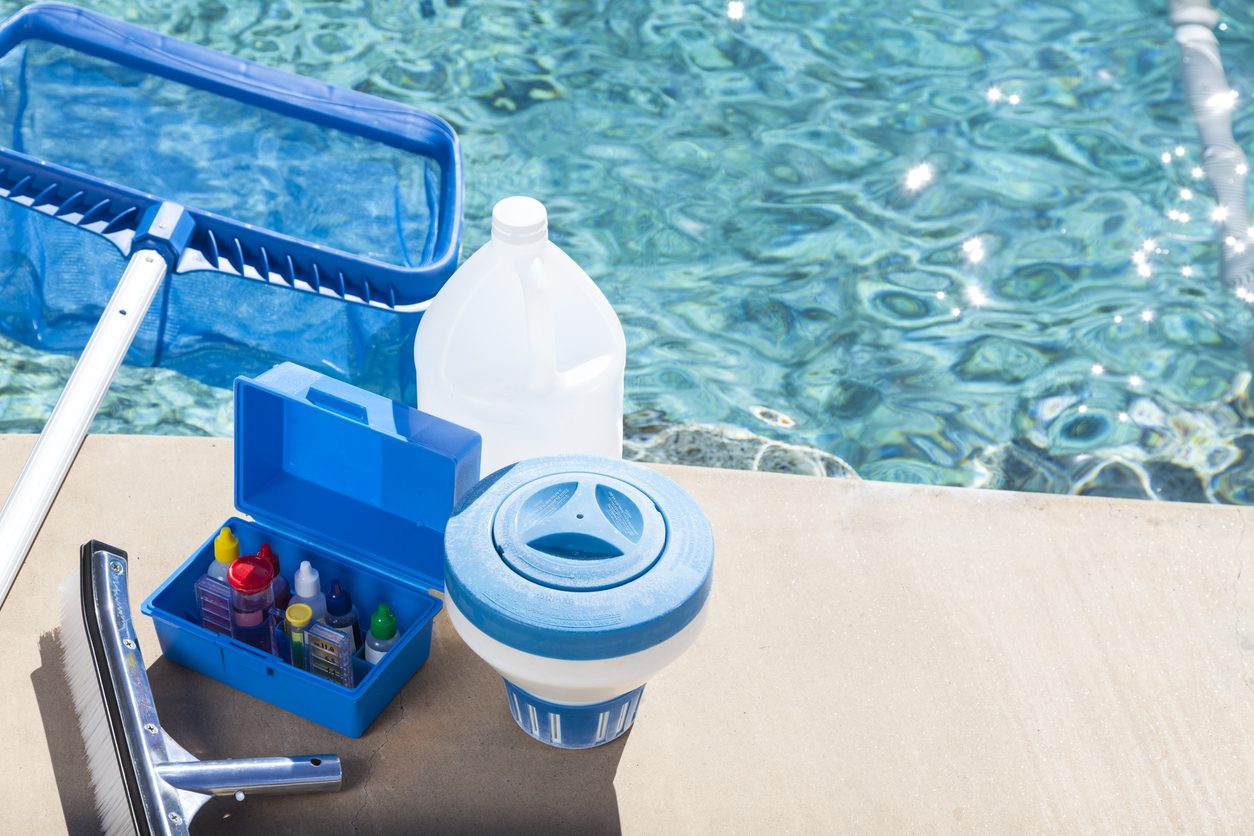
If you’re a pool owner, you’ve probably heard of “shocking” your pool, but what does it do? Pool shock is one of the most powerful tools for keeping water clear, safe, and balanced, especially after heavy use or contamination.
Unlike everyday chlorine, pool shock delivers a rapid chemical boost that tackles problems everyday sanitising routines can’t always manage.
This article explains pool shock, what it does, when to use it, and how to apply it safely to keep your swimming pool in pristine condition all season. Our team at Aquascapes have been offering swimming pools in the Cotswolds for several years; during this time, we have helped many pool owners understand how to care for their pool!
What Is Pool Shock?
Pool shock refers to quickly adding a high dose of chlorine (or a chlorine alternative) to your pool water. This is designed to oxidise contaminants and restore proper sanitisation levels rapidly.
Shock treatments typically come as granular chlorine (like calcium hypochlorite or dichlor) or a non-chlorine oxidiser.
Unlike regular chlorination, which works steadily over time, shock treatments offer a quick and concentrated solution. They are ideal for clearing cloudy water, destroying bacteria, and resetting the chemical balance after heavy pool use or bad weather.
Why Shocking Your Pool Is Important
While standard chlorine levels are enough to keep a pool sanitised under normal conditions, there are times when your pool’s chemical balance needs a more intensive fix. This is where shock comes in.
Over time, chlorine reacts with contaminants in the water to form chloramines, which are used-up chlorine compounds. These not only smell strong (that classic “chlorine smell”) but also irritate the skin and eyes and do little to disinfect the water.
Shocking your pool destroys these chloramines, restores free chlorine levels, and helps ensure your water remains safe and hygienic. It’s a key part of any well-rounded maintenance routine.
What Does Shock Do to Pool Water?
A shock treatment works by delivering a high concentration of oxidising chemicals into your pool, which rapidly:
- Eliminates chloramines, clearing the strong smell and restoring effective sanitisation
- It kills bacteria and viruses that may have built up due to heavy use, debris, or poor circulation.
- Oxidises organic matter such as sweat, sun cream, body oils, and plant debris
- Clears up cloudy or dull water, helping your filter catch fine particles
- Destroys algae spores and, in some cases, treats mild to moderate algae blooms.
If your water has turned green, smells unpleasant, or looks cloudy, shocking is often the first and most effective step to bringing it back to life.
When Should You Shock Your Pool?
There are several key times when pool shocking becomes necessary:
- After heavy rain or storms, when debris and acidic water disrupt the chemical balance
- Following a pool party or high bather load, which introduces extra organic waste
- If water is cloudy, green, or has an odour
- At pool opening and closing, to sanitise the water before and after seasonal use
- After visible algae appears, as part of a treatment plan
Even if your water looks fine, it’s a good habit to shock your pool once every 1 to 2 weeks during the swimming season as a preventative measure.
Types Of Pool Shock Explained
Several types of pool shock are available, and choosing the right one depends on your pool’s setup and current condition.
Calcium Hypochlorite (Cal-Hypo) is a fast-acting, highly concentrated chlorine shock. It’s widely used and very effective, but should be applied in the evening, as sunlight can reduce its strength.
Sodium Dichlor is a more stable form of chlorine shock, dissolving slower. It is often used in regular maintenance. It adds a stabiliser (cyanuric acid) to the pool, which helps protect chlorine from sunlight, which is particularly useful for outdoor pools.
A non-chlorine oxidising shock uses potassium monopersulfate to oxidise contaminants without adding chlorine. This is a good choice for indoor pools or swimming shortly after treatment, as it doesn’t raise chlorine levels.
Each type has advantages; Aquascape can help you determine the best pool.
How to Shock a Pool Safely and Effectively
Shocking a pool is simple, but it’s essential to do it properly to get the best results and ensure safety. Start by checking your pool’s chemical levels using a test kit. If chlorine is low or chloramines are high, it’s time to shock.
Follow the product instructions carefully when dosing, and always pre-dissolve powdered shock in a bucket of water before adding it to the pool, especially if you have a vinyl liner. This prevents bleaching or staining.
Apply the shock in the evening or dusk so sunlight doesn’t break it down before it has time to work. Pour the mixture around the pool’s perimeter with the pump running to help circulate it.
After shocking, leave the pool running overnight or for at least 8 hours to ensure full circulation. Only re-enter the water once chlorine levels have dropped safely, usually below five ppm.
Common Misconceptions About Pool Shock
One of the biggest misconceptions is that shock can replace your regular chlorine routine. In reality, shock is a supplement, not a substitute. You still need a consistent sanitiser source to maintain clean water daily.
Another myth is that a strong chlorine smell means too much chlorine; it’s a sign of chloramines, meaning your water needs to be shocked to restore free chlorine levels.
Finally, some people believe that more shock is always better. Overshocking can damage your liner, affect water balance, and waste money. It’s always better to dose accurately based on water volume and need.
Let Aquascape Help Keep Your Pool Balanced
Pool maintenance doesn’t have to be guesswork. Aquascape offers tailored chemical advice and support for every aspect of pool care, from regular sanitising to emergency shock treatments.
Our team can help you:
- Identify when a shock treatment is necessary
- Choose the correct type of shock for your pool and usage.
- Apply treatments safely and effectively.
- Restore water clarity after storms, algae, or neglect.
We also offer professional testing services, regular maintenance visits, and guidance to ensure your pool remains balanced and beautiful throughout the season. Contact us now for more information!
Frequently Asked Questions
Can I use shock instead of chlorine?
No, shock is a high-dose oxidiser used periodically. You still need a regular source of chlorine (or bromine) to maintain daily sanitisation.
How long after shocking a pool can I swim?
Wait until chlorine levels drop below five ppm. This usually takes 8–12 hours, but always test before swimming.
Will shock the pool clear cloudy water?
Yes, in many cases. Shock treatments help remove organic particles and oxidise contaminants, restoring water clarity with proper filtration.
Is pool shock safe for all types of pools?
Most types are safe but always read the label. Some shocks may not be suitable for vinyl liners or saltwater pools without dilution or pre-dissolving.
Can I shock my pool during the day?
It’s best to shock in the evening or at dusk, especially with chlorine-based shock, to prevent UV degradation before the chemicals can do their job.

