
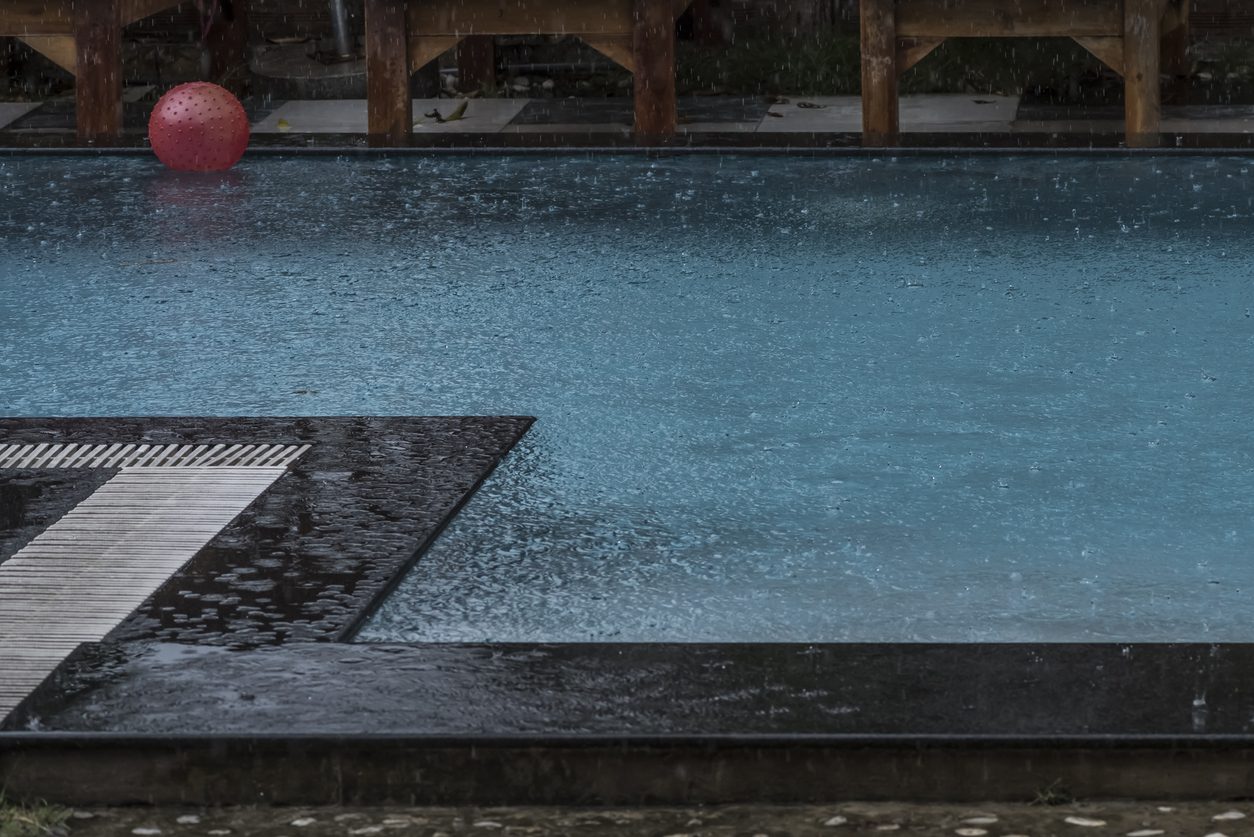
Rain may seem harmless, but when it comes to your swimming pool, even a light shower can upset the delicate chemical balance that keeps your water clean and safe.
In the UK, where weather conditions can shift quickly and rainfall is frequent, understanding how rain affects pool water is essential for proper maintenance.
This article explains exactly what rain does to your pool, from altering your pH levels to introducing contaminants and what you should do to keep things under control.
How Rainwater Affects Your Swimming Pool
Rainwater impacts your pool in several ways. It’s not just the water itself; it’s what comes with it. Whether it’s slightly acidic rainfall or stormwater runoff carrying dirt and debris, rain can compromise your pool’s water quality and the efficiency of your equipment.
Even a modest downpour can dilute your chemicals, lower the pH, increase the risk of algae, and affect circulation. Left unchecked, these issues can lead to cloudy water, corrosion, or the need for costly corrective treatments. Our team at Aquascapes are here to make sure you know everything you need to know about
Rain Can Lower Your Pool’s pH Levels.
Rainwater is naturally slightly acidic, typically between 5.0 and 5.5. Mixing it with pool water can lower the overall pH level, pushing it below the ideal range of 7.2 to 7.6.
A low pH can lead to eye and skin irritation, corrosion of metal fixtures, and damage to pool surfaces. It can also make chlorine less effective, leaving your water vulnerable to bacteria and algae. After any rain hefty rainfall, testing and adjusting your pH should be a top priority.

Dilution of Pool Chemicals After Rain
Rain doesn’t just bring more water; it also reduces the concentration of chemicals already in your pool. When fresh water is added in large quantities, chlorine, alkalinity, calcium hardness, and stabiliser levels dilute.
This sudden drop in chemical strength means your pool may no longer be adequately sanitised. Chlorine, in particular, is essential to keeping the water safe, and even a shortfall can allow algae or bacteria to develop quickly.
After rainfall, you must test your water and top up chemicals accordingly, especially if the pool has been uncovered and directly exposed to the rain.
Increased Risk Of Contamination
Rainwater often carries more than just H₂O; it can introduce organic matter, dust, pollen, and pollutants from the surrounding environment. If your pool is near trees or open landscaping, stormwater runoff can wash leaves, soil, and other debris directly into the pool.
This can overwhelm your filtration system and make the water appear murky or discoloured. Even if your chlorine levels were ideal beforehand, they can be quickly depleted while trying to neutralise the sudden contaminant increase.
Rainy conditions also create the perfect environment for algae to thrive, especially if the water is warm, the chlorine is low, and the pH has dropped.
What Happens When Rain Raises Pool Water Levels?
Another common issue with rainfall, particularly in the UK during spring and autumn, is excess water, which raises the pool’s water level beyond what your skimmers can manage. When the water level gets too high, the skimmers can’t effectively pull in surface debris, reducing circulation and increasing the chance of blockages.
Heavy rain can also cause the pool to overflow, flooding surrounding landscaping or decking. If your filtration system continues running during this time, it could draw in water from ground level or become unbalanced.
If your pool’s water level is high after a downpour, it may need to be partially drained to restore proper circulation and prevent overflow damage.

How to Treat Your Pool After Rain
Rain doesn’t mean disaster, provided you respond quickly and appropriately. Once the rain stops, remove any visible debris from the pool and check your filter baskets.
Then, test your water for pH, chlorine, and alkalinity. Use a pH increaser or decreaser as needed to restore balance. If chlorine has dropped below safe levels, add the appropriate amount to restore sanitisation.
In many cases, especially after a heavy storm, it’s worth applying a shock treatment to quickly destroy any bacteria or organic material introduced by the rain. If the water appears cloudy or greenish, an algaecide or clarifier can help bring it back to normal.
Always leave the pool running for several hours after treatment to ensure the chemicals circulate entirely.
Should You Cover Your Pool Before It Rains?
One of the best ways to protect your pool from rain-related problems is to cover it before it arrives. A quality pool cover will prevent debris, minimise water dilution, and reduce the chance of overflow.
Not every rainfall will require this, but it’s worth the effort if a heavy downpour is forecast—or if your pool is surrounded by trees or open ground. Once the rain passes, remove the cover, skim any surface debris, and proceed with a quick test of your water.
Regular pool cover use, particularly during shoulder seasons like spring and autumn, can significantly reduce the maintenance needed after rainfall.
How Aquascape Can Help Maintain Water Quality Year-Round
At Aquascape, we understand that the UK’s unpredictable weather can make pool maintenance challenging. That’s why we offer routine water testing, chemical balancing, and seasonal servicing to ensure your pool remains in top condition, rain or shine.
Whether you’re dealing with murky water after a storm, algae growth, or an overflow issue, our experienced team can respond quickly with tailored solutions. We also offer advice on choosing the right covers and automation systems to help you stay one step ahead of the weather.
With Aquascape, you can enjoy the benefits of pool ownership without the stress of constant maintenance. Get in touch today for more information!

Frequently Asked Questions
Is it safe to swim in the pool after rain?
Not always. Rain can lower chlorine levels and introduce bacteria, so it’s best to test and treat your water before swimming, especially after heavy rainfall.
Should I shock my pool after every rainfall?
Not necessarily. Light rain may not require it, but a shock treatment is a good idea if your chlorine drops or you notice cloudiness or debris.
Can rain cause algae in my pool?
Yes. Rain dilutes chlorine and introduces organic material, which can trigger algae growth, particularly if pH and chlorine levels aren’t corrected quickly.
How much rain is too much for a pool?
If rain raises the water level above the middle of the skimmer opening, it can affect circulation and may require partial draining to restore balance.
Will my pool overflow during heavy storms?
It can be left uncovered and unmanaged. A pool cover helps, and excess water can be drained manually to prevent flooding around the pool.

