
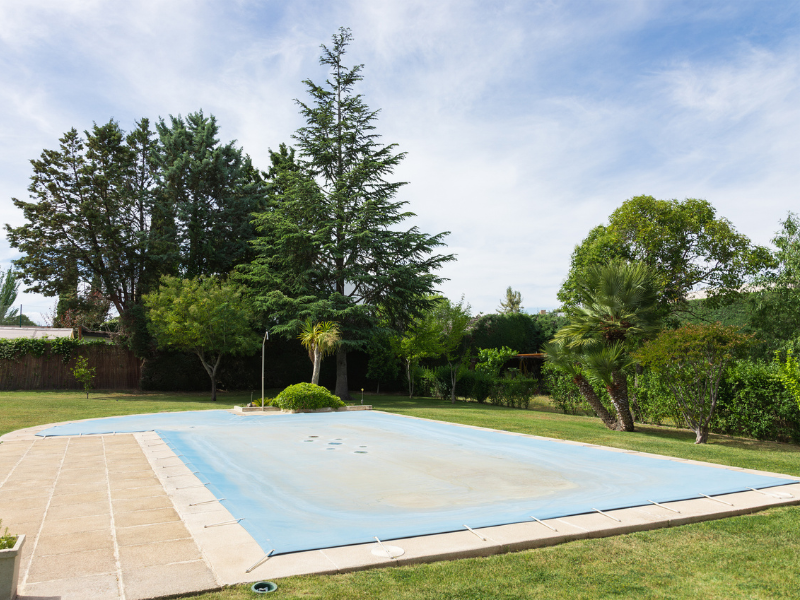
Opening a swimming pool after winter involves more than removing the cover and switching the pump back on. The pool, equipment and water should all be checked carefully before use.
The exact process depends on how the pool was winterised, the condition of the water and whether frost, storms or low temperatures caused any damage.
Working through the following steps can help identify problems early and prepare the pool for the warmer months.
When should you reopen your swimming pool?
There is no single opening date that suits every pool.
Consider:
- The local weather and overnight temperatures.
- When you expect to start swimming.
- The condition and temperature of the water.
- Whether algae has started to develop.
- How much cleaning or equipment work is required.
Opening the pool before it is needed gives you time to deal with cloudy water, leaks or equipment faults without delaying its use.
1. Remove and clean the winter cover
Begin by removing standing water, leaves and loose debris from the winter cover.
Take care not to tip dirty cover water into the pool. Once removed, inspect the cover for tears, damaged fittings or signs of wear. Clean it thoroughly and allow it to dry before storing it.
If you use an automatic cover, check that the mechanism, tracks and visible components are working correctly.
2. Inspect the pool and surrounding area
Check the pool before adding water or restarting any equipment.
Look for:
- Cracks or movement in the pool shell.
- Loose or damaged tiles and coping.
- Liner tears, creases or movement.
- Damaged fittings, steps or handrails.
- Signs of frost damage.
- Unexplained water loss.
- Debris around skimmers and drains.
Visible structural damage or substantial water loss should be investigated before the pool is recommissioned.
3. Restore the correct water level
The water should usually sit at the correct level for the skimmer and circulation system to work effectively.
If the level has dropped slightly, it may simply need topping up. A significant loss could indicate a leak, damaged fitting or winterisation problem.
Do not repeatedly refill the pool without checking why the water level is falling.
4. Reconnect and inspect the equipment
Any plugs, fittings or components removed during winterisation must be replaced correctly before the system is started.
Inspect:
- The pump.
- Filter.
- Heater.
- Valves and pipework.
- Skimmer baskets.
- Dosing equipment.
- Electrical controls.
- Pool-cover equipment.
Look for cracks, leaks, loose connections or signs of corrosion.
If you are unsure how to restart electrical, heating or pressurised equipment, arrange professional help rather than risk damaging the system.
5. Restart circulation and filtration
Once the equipment has been checked and reassembled, restart the circulation system according to the manufacturer’s instructions.
The process may include:
- Opening the correct valves.
- Priming the pump.
- Checking the water flow.
- Inspecting pipework for leaks.
- Monitoring filter pressure.
- Cleaning or backwashing the filter.
Listen for unusual pump noise and stop the system if there is poor flow, leaking pipework or an unexpected pressure reading.
6. Clean the swimming pool
Remove as much debris as possible before expecting the filtration system to clear the water.
Clean the pool by:
- Skimming leaves and floating debris.
- Brushing the walls, steps and pool floor.
- Vacuuming settled dirt.
- Emptying baskets.
- Cleaning the waterline.
- Checking areas where circulation may be weaker.
Heavy debris can place unnecessary pressure on the filtration system, so physical cleaning should come before chemical treatment.
7. Test and balance the water
Water treatment should be based on test results rather than guesswork.
Depending on the pool system, testing may include:
- pH.
- Sanitiser level.
- Total alkalinity.
- Calcium hardness.
- Stabiliser.
- Water clarity.
The correct treatment depends on the pool volume, water condition and products being used. Always follow the manufacturer’s instructions and never mix pool chemicals.
If the water is green, heavily contaminated or difficult to balance, professional testing may be the safest and quickest route.
Aquascape can also advise on pool chemicals and maintenance equipment.
8. Check the heater and pool cover
Do not start the heating system until circulation has been restored and the equipment has been inspected.
Check for:
- Leaks.
- Error messages.
- Unusual noises.
- Poor water flow.
- Damaged electrical connections.
The summer or automatic cover should also be cleaned and checked before regular use. A suitable cover can help retain heat, reduce debris and limit unnecessary water loss.
Common problems after winter
Problems that may appear when reopening a pool include:
- Green or cloudy water.
- A pump that will not prime.
- Low circulation.
- High filter pressure.
- Leaking fittings.
- Heater faults.
- Damaged liners or tiles.
- Pool-cover problems.
- Continued water loss.
Some issues can be resolved through cleaning or routine servicing. Others may require replacement equipment or more substantial swimming pool repairs and renovations.
Can Aquascape reopen your pool?
Aquascape provides planned and ad-hoc swimming pool maintenance across Gloucestershire, the Cotswolds and surrounding areas.
Depending on the pool and agreed service, a seasonal visit may include checking the pool and equipment, cleaning, water testing, chemical balancing and identifying repairs or replacement parts.
Professional support can be particularly useful where the pool has suffered winter damage, the equipment will not restart or the water condition has deteriorated.
Get your pool ready for the new season
Careful reopening can help prevent equipment damage, water-quality problems and delays once warmer weather arrives.
Contact Aquascape to discuss spring maintenance or help preparing your pool for regular use.
Call 01453 886952 or contact Aquascape online.

